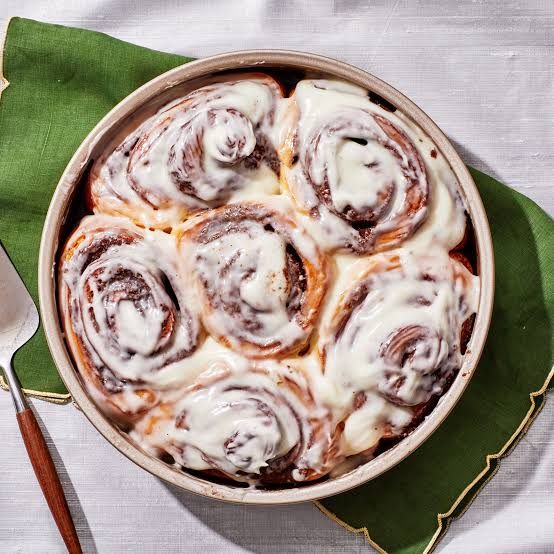
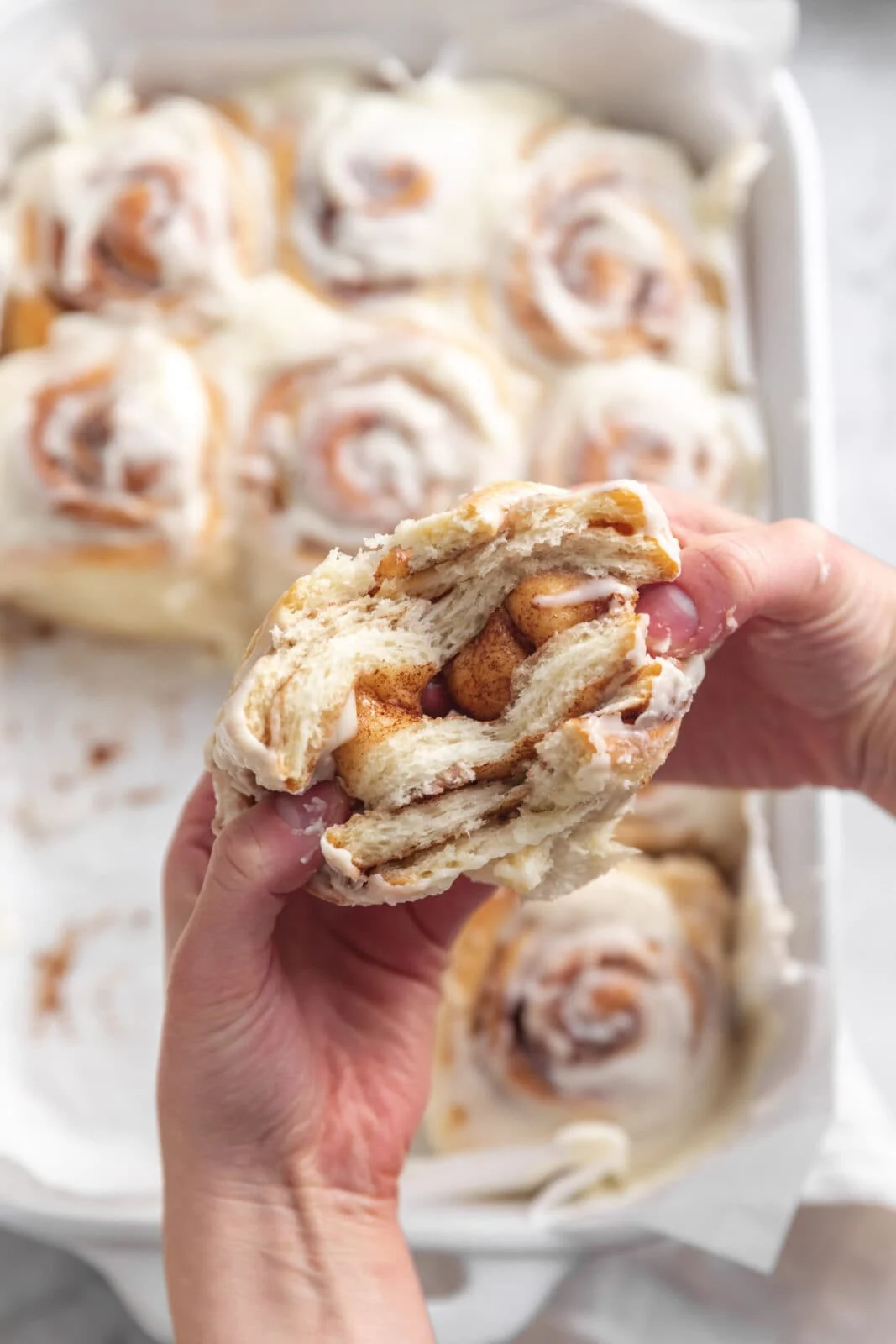
These easy homemade cinnamon rolls with cream cheese frosting are soft, fluffy, and filled with buttery cinnamon sugar. The tender yeast dough bakes into golden swirls, then gets a generous layer of tangy, sweet cream cheese frosting while still warm. They’re perfect for a cozy weekend breakfast, brunch, or a special holiday morning.
Yield: 12 rolls | Prep: about 30 minutes active | Rising: approximately 1½–2 hours | Bake: 22–28 minutes | Oven: 350°F (175°C). Times vary with room temperature and dough temperature.
Why You’ll Love These Cinnamon Rolls
- Pillowy homemade dough with beautiful cinnamon-sugar swirls.
- Rich, creamy frosting made with real cream cheese.
- Simple pantry ingredients and clear step-by-step directions.
- Great for making ahead and reheating for breakfast.
Ingredients
For the dough
- 1 cup (240 ml) whole milk, warmed to about 105–110°F (40–43°C)
- 2¼ teaspoons (7 g) active dry yeast (one standard packet)
- ⅓ cup (67 g) granulated sugar
- 2 large eggs, room temperature
- ⅓ cup (76 g) unsalted butter, melted and cooled until warm, not hot
- 4¼ cups (about 530 g) all-purpose flour, plus a little for dusting
- 1 teaspoon fine salt
For the cinnamon filling
- ½ cup (113 g) unsalted butter, very soft
- ¾ cup (150 g) packed light brown sugar
- 2 tablespoons ground cinnamon
- Pinch of salt
For the cream cheese frosting
- 4 ounces (113 g) full-fat block cream cheese, softened
- ¼ cup (57 g) unsalted butter, softened
- 1 cup (120 g) powdered sugar, sifted
- 1 teaspoon vanilla extract
- 1–2 tablespoons milk, only as needed for spreading
Recipe note: The measurements here are an original, practical recipe based on the dessert shown. The uploaded photographs illustrate the finished rolls and several preparation stages; they do not specify exact ingredient amounts.
How to Make Homemade Cinnamon Rolls
Step 1: Activate the yeast
Combine the warm milk, yeast, and 1 tablespoon of the measured granulated sugar in a large bowl. Leave for 5–10 minutes until foamy. If it does not foam, the yeast may be inactive; start again with fresh yeast and correctly warmed milk.
Step 2: Mix the dough
Add the remaining sugar, eggs, and melted butter. Stir together, then add flour and salt. Mix until a soft, slightly tacky dough forms. If using a stand mixer, use the dough hook on low speed. Avoid adding too much extra flour, which can make the rolls dense.
Step 3: Knead until smooth
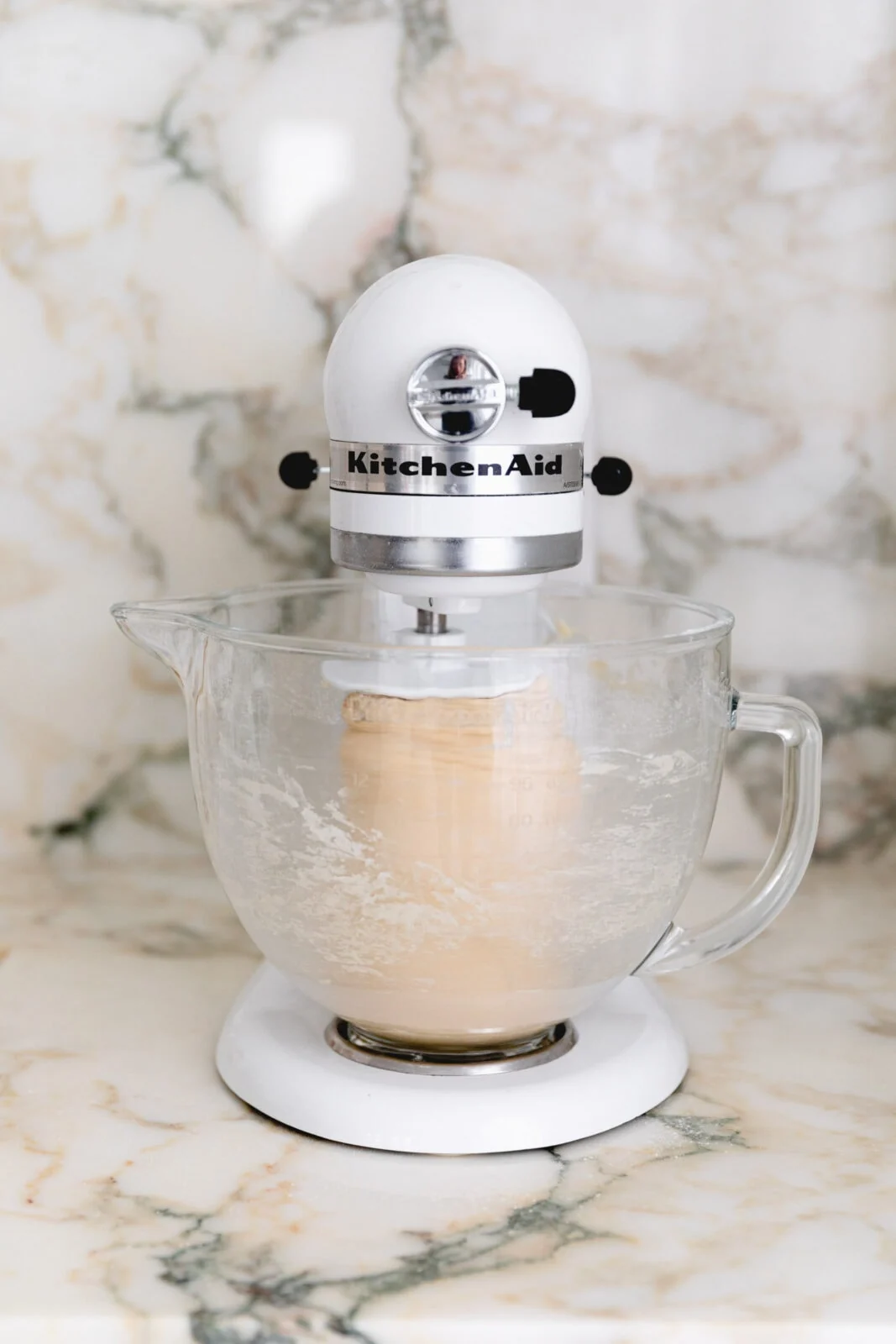
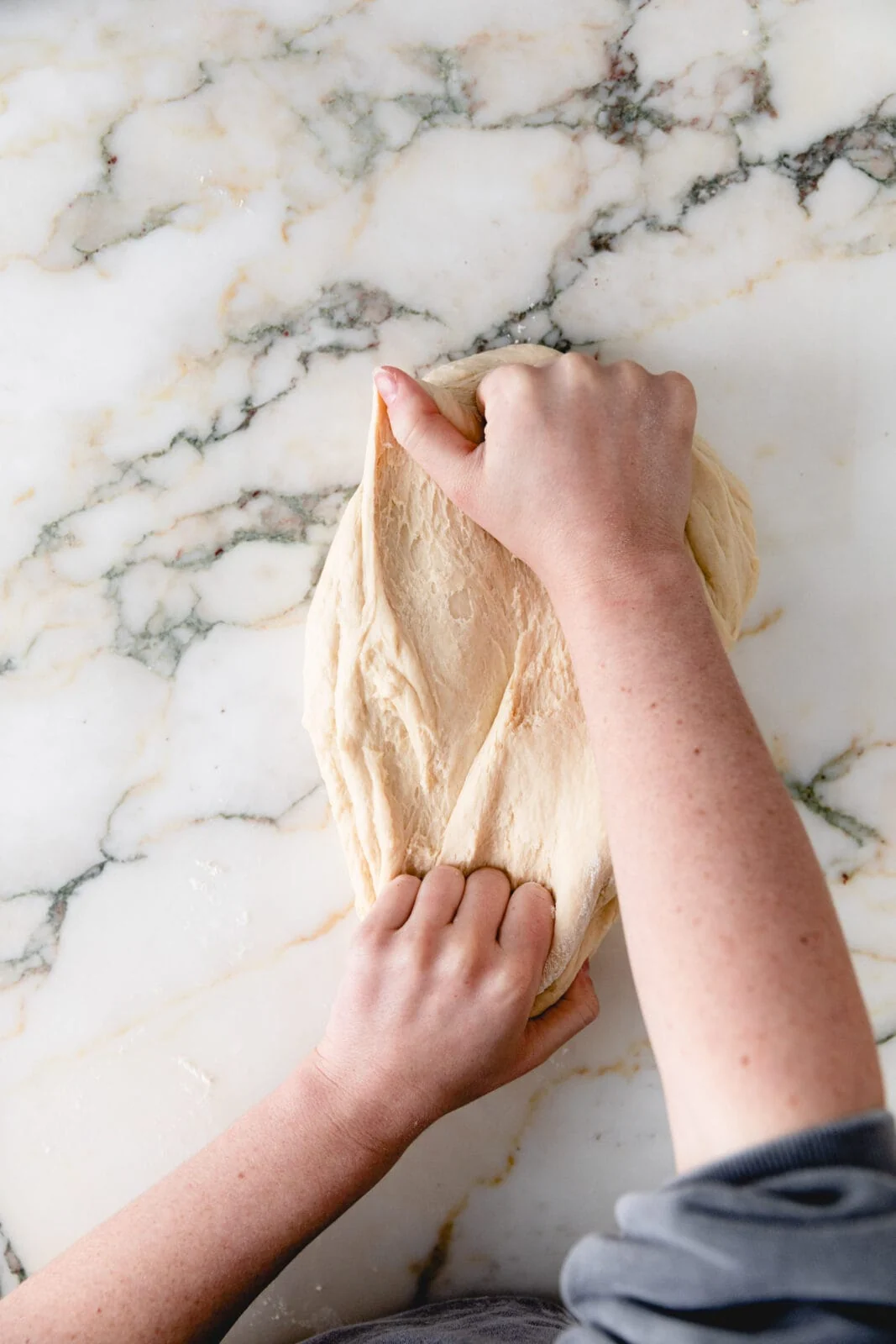
Knead for 8–10 minutes by hand or 6–8 minutes with a stand mixer, until the dough is smooth, elastic, and slightly tacky. It should stretch thinly without tearing immediately. Transfer to a lightly greased bowl, cover, and let rise in a warm place for 60–90 minutes or until roughly doubled in size.
Step 4: Make the cinnamon filling
In a small bowl, mix the soft butter, brown sugar, cinnamon, and pinch of salt into a spreadable paste. Grease a 9-by-13-inch baking dish.
Step 5: Roll and fill the dough
Gently deflate the risen dough and turn it onto a lightly floured surface. Roll into a rectangle approximately 16 by 12 inches. Spread the cinnamon filling evenly across the surface, leaving a narrow border on one long edge. Roll up tightly from the opposite long edge to form a 16-inch log. Pinch the seam to seal.
Step 6: Cut into 12 rolls
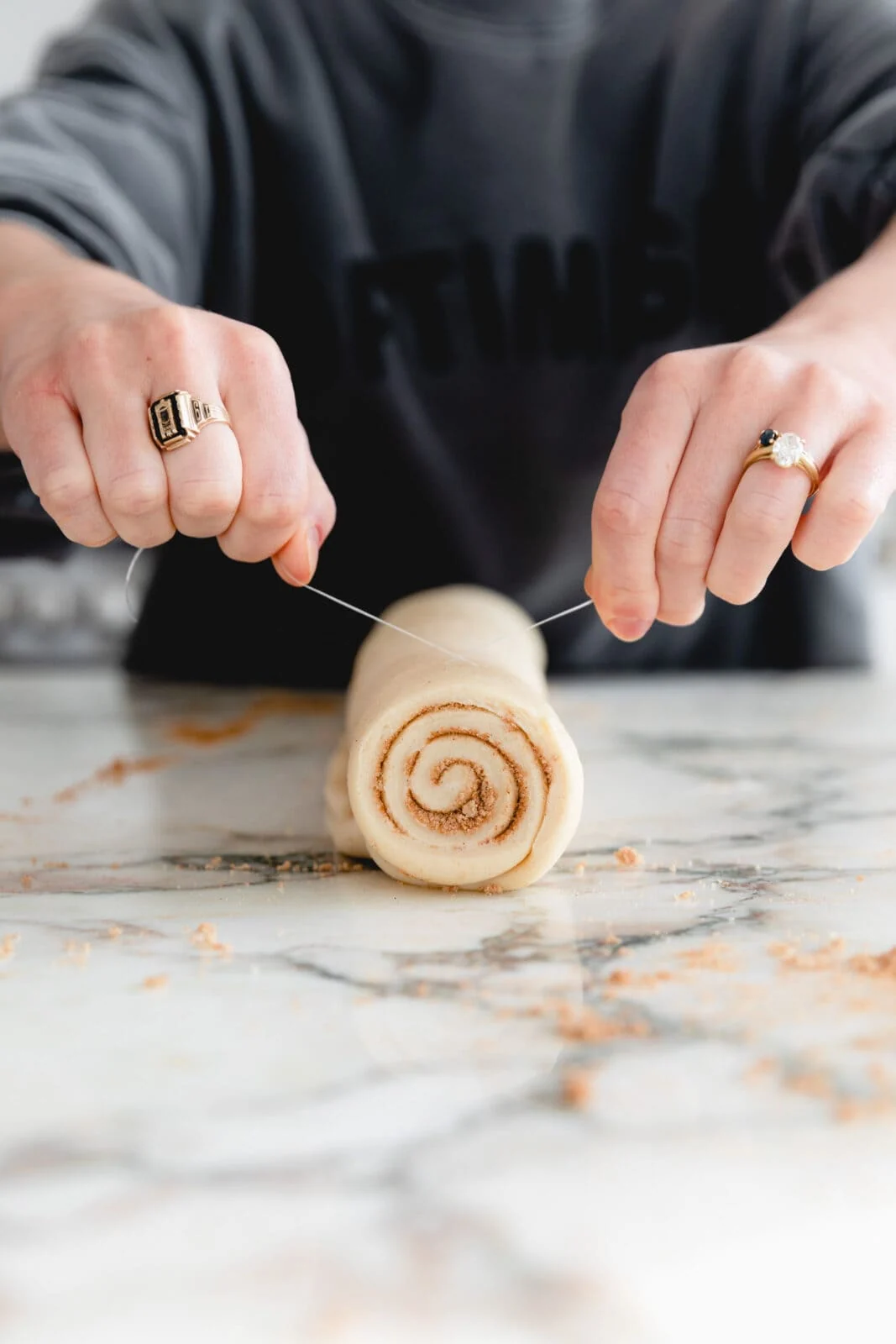
Use unflavored dental floss or a sharp serrated knife to cut the log into 12 even pieces. For floss, slide it under the log, cross the ends above, and pull to slice cleanly without squashing the swirl. Arrange rolls in the prepared baking dish with a little space between them.
Step 7: Let the rolls rise again
Cover loosely and let rise for 30–45 minutes, until visibly puffy. Meanwhile, preheat the oven to 350°F (175°C). The rolls should expand and begin touching one another.
Step 8: Bake until golden
Bake for 22–28 minutes, until the tops are lightly golden and the center rolls are cooked through. For extra confidence, an instant-read thermometer inserted into the dough (not the filling) should read around 190°F (88°C). If the tops brown too quickly, tent loosely with foil. Cool for 10 minutes before frosting.
Step 9: Make the cream cheese frosting
Beat softened cream cheese and butter until smooth and fluffy. Add powdered sugar and vanilla, then beat until creamy. Mix in milk a teaspoon at a time only if needed to reach a spreadable consistency.
Step 10: Frost and serve
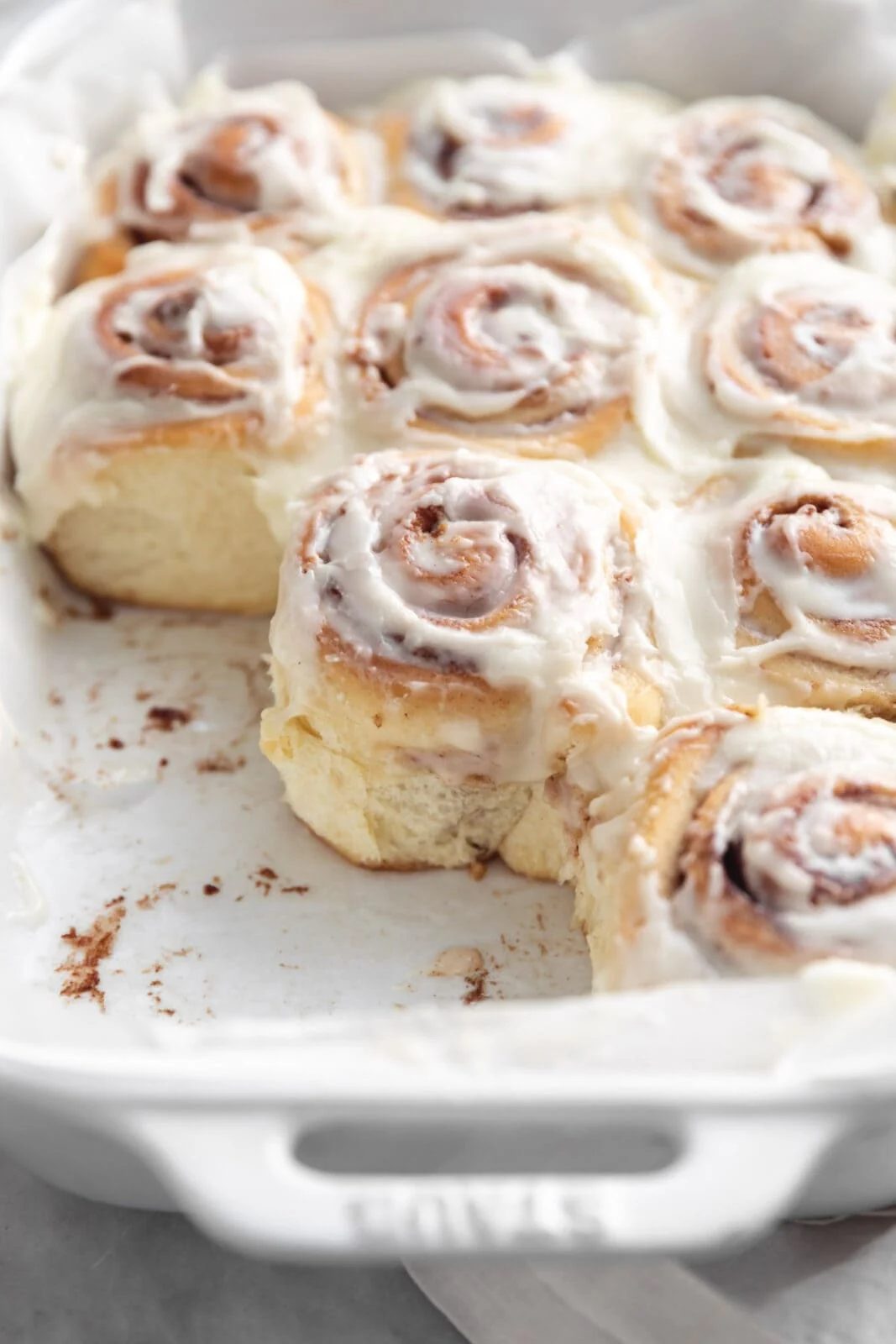
Spread the cream cheese frosting over the rolls while they are still warm, but not piping hot. The frosting will soften into the cinnamon swirls. Serve warm for the fluffiest texture.
Tips for Soft, Fluffy Cinnamon Rolls
- Check the milk temperature: Very hot milk can damage yeast; lukewarm milk is ideal.
- Measure flour carefully: Spoon flour into the measuring cup and level it, or use a kitchen scale.
- Keep the dough slightly tacky: Excess flour produces dry rolls.
- Give the dough time to rise: Rise times depend on room temperature; look for volume rather than the clock alone.
- Use soft, not melted, filling butter: This helps keep the cinnamon filling in place.
- Don’t overbake: Remove the rolls when the dough is cooked through and tops are lightly golden.
- Frost warm rolls: Let them cool briefly so the frosting melts gently rather than turning runny.
Make-Ahead and Overnight Instructions
To prepare the night before, assemble the cut rolls in the baking dish, cover tightly, and refrigerate for up to 12 hours. The next morning, let them stand at room temperature for 45–90 minutes, until puffy, then bake as directed. The dough may rise slowly after refrigeration, so allow additional time if needed.
How to Store and Reheat
Because the frosting contains cream cheese, refrigerate leftover frosted cinnamon rolls in a covered container for up to 4 days. Reheat an individual roll briefly in the microwave until warm, not hot. Unfrosted rolls can be frozen, tightly wrapped, for up to 2 months; thaw and warm before frosting. Refrigerate cream cheese frosting promptly rather than leaving it out for extended periods.
Frequently Asked Questions
Can I use instant yeast instead of active dry yeast?
Yes. Use the same amount of instant yeast and mix it directly into the flour; the dough may rise faster. The milk should still be warm, not hot.
Why didn’t my cinnamon rolls rise?
Common causes include expired yeast, milk that was too hot, or a cold kitchen. Check the yeast’s activity and allow the dough to rise in a comfortably warm, draft-free spot.
Can I make cinnamon rolls without a stand mixer?
Absolutely. Mix the dough with a sturdy spoon, then knead by hand on a lightly floured surface until smooth and elastic.
Can I make the frosting ahead of time?
Yes. Refrigerate the frosting in an airtight container for up to 3 days. Bring it to a spreadable consistency before frosting the warm rolls.
How do I prevent dry cinnamon rolls?
Avoid adding excess flour, don’t overbake, and store leftovers covered. Measuring flour by weight is especially helpful.
Whether you’re baking them for brunch, a holiday breakfast, or a weekend treat, these homemade cinnamon rolls deliver soft centers, fragrant cinnamon layers, and a generous finish of cream cheese frosting.